Payment gateway
 Payment Link

 Buy now pay later
 Scan to pay QR

 SmartPOS
 Collection support
 Pay-out support
 Appota E-wallet

 Top up service
 Charging service
 Press
 Promotions
 Events
 Blog


In 2026, Vietnam’s retail market is seeing more than just shifts in product category performance. Consumer purchasing behavior is also evolving, with shoppers becoming increasingly flexible in how they make spending decisions. These changes are creating new demands on businesses’ retail and growth strategies.
Spending trends vary across product categories
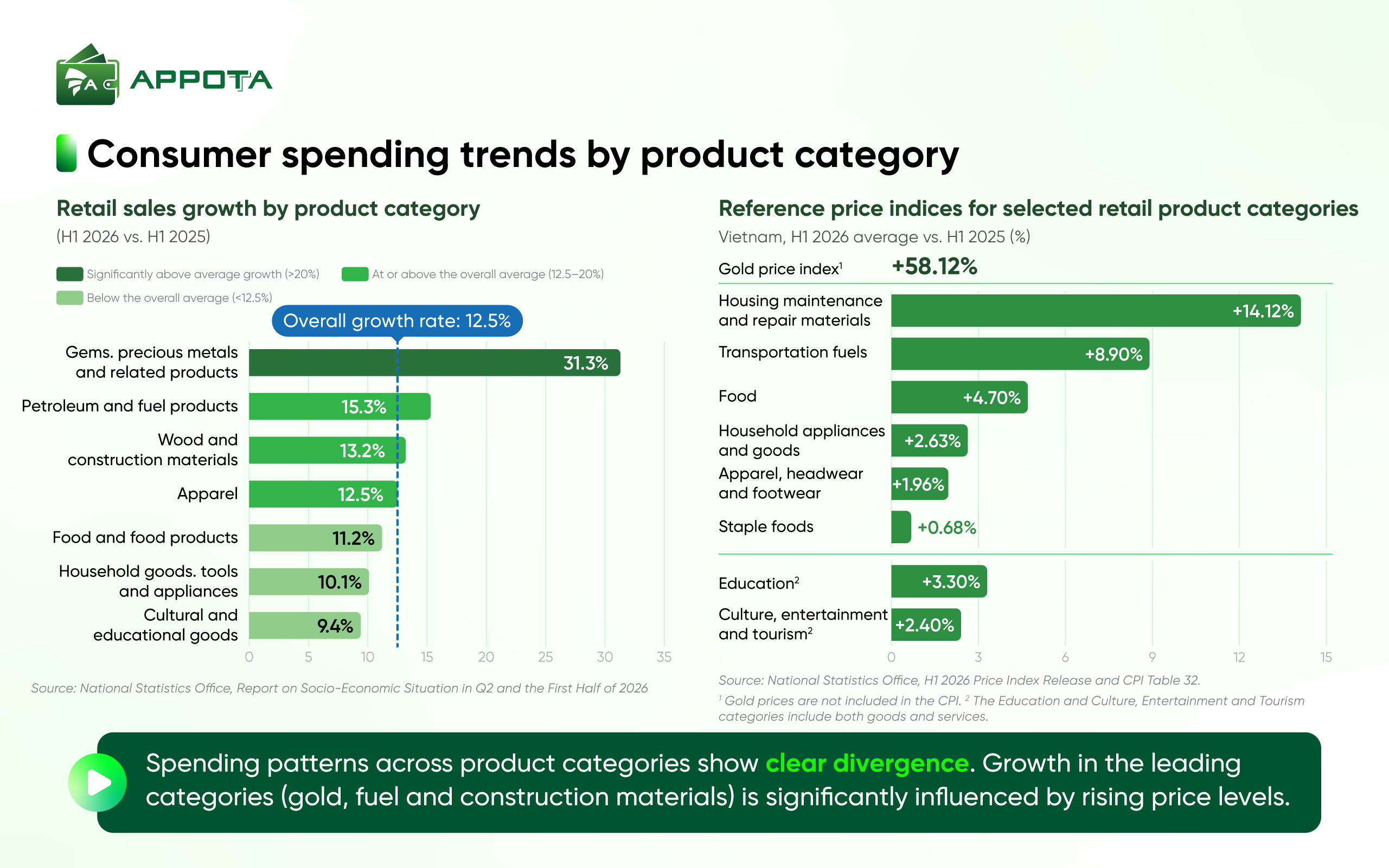
In the first half of 2026, retail sales of goods grew by 12.5% year-on-year. However, growth varied considerably across product categories. Gems and precious metals recorded the strongest increase at 31.3%, followed by petroleum products, wood and construction materials. Notably, growth in these leading categories was significantly influenced by price increases. Meanwhile, apparel, staple foods, food products and household goods continued to post positive growth despite relatively lower price increases.
On e-commerce platforms, spending was more concentrated in categories associated with everyday consumption and recurring purchases. According to Metric’s H1 2026 market data, Beauty, Women’s Fashion and Home & Living remained the top three categories by sales value across Shopee, TikTok Shop, Lazada and Tiki, reaching VND 49.508 trillion, VND 40.351 trillion and VND 37.679 trillion, respectively.
Notably, Grocery & Food, Mother & Baby, Health, and Phones & Tablets all recorded sales growth of approximately 49–54%. This indicates that online spending is expanding beyond the largest categories to encompass a broader range of products catering to everyday essentials, personal and family care, and technology needs.
Consumer spending across shopping channels
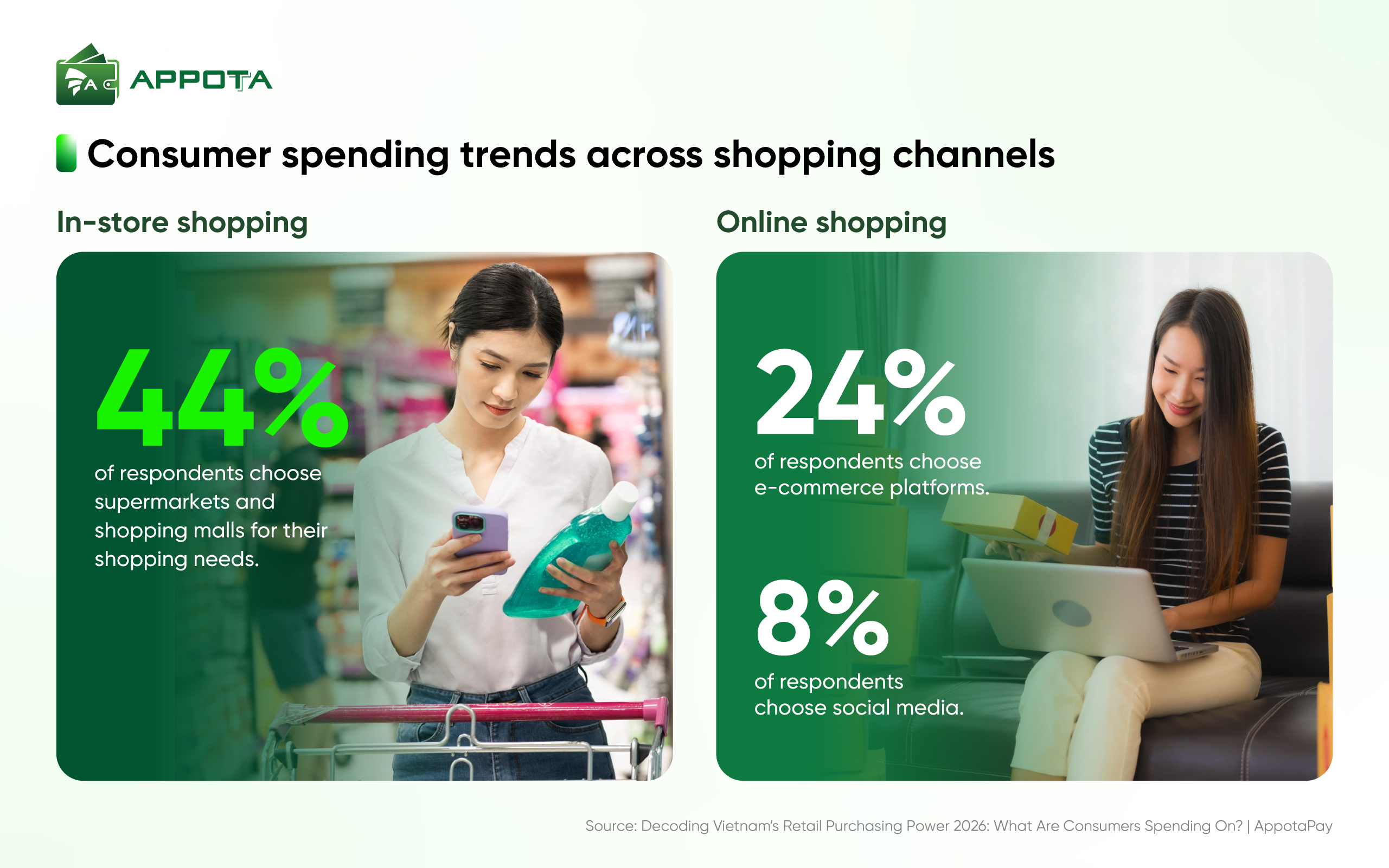
Physical stores continue to play an important role in retail shopping. According to the survey, 44% of respondents identified supermarkets and shopping malls as their preferred shopping destinations.
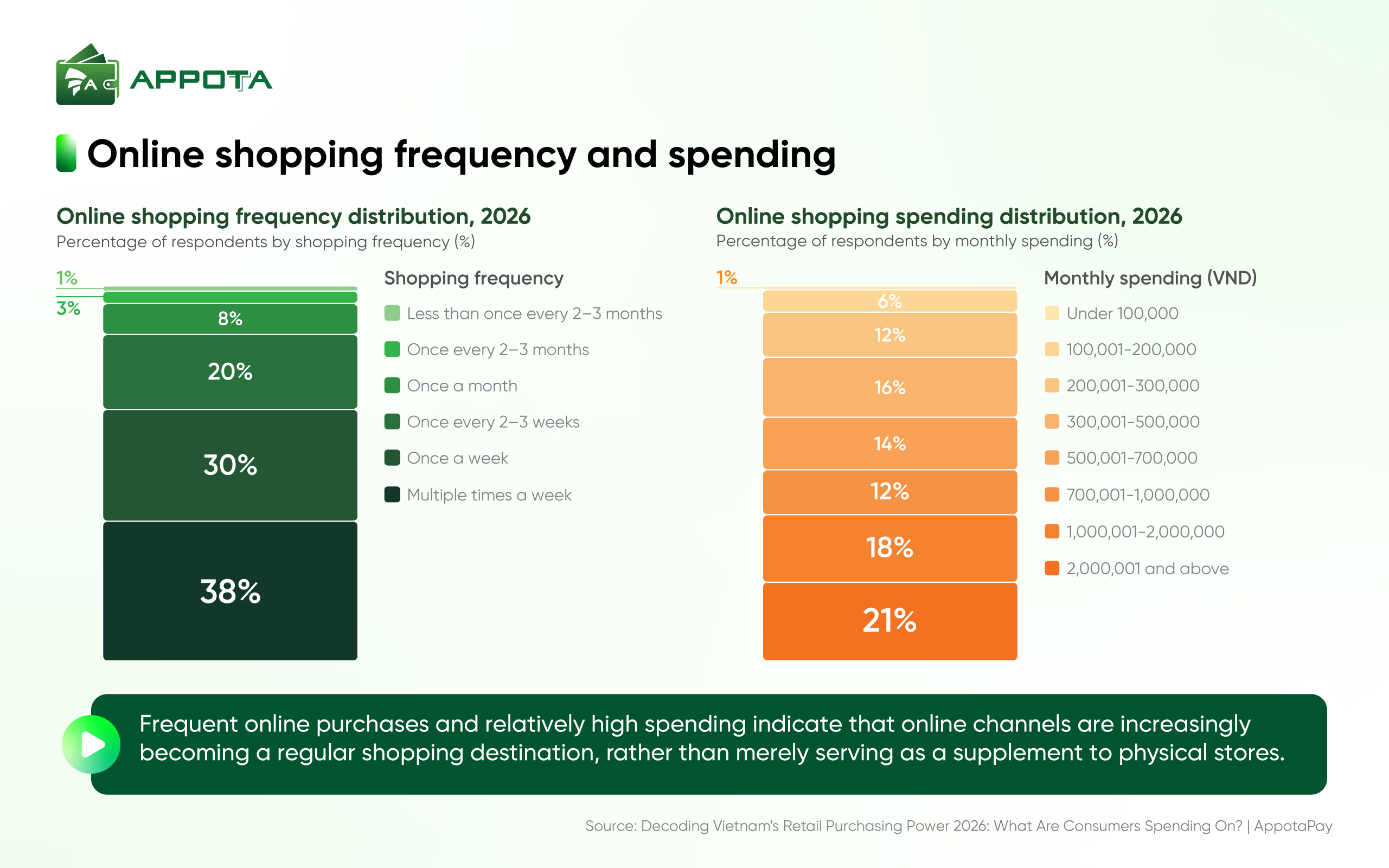
At the same time, online shopping is gaining traction, not only in terms of frequency but also spending levels. A 2026 Q&Me survey found that 39% of respondents spend at least VND 1 million per month on online shopping. Notably, the share of consumers spending more than VND 2 million monthly rose from 15% in 2025 to 21% in 2026, indicating a growing willingness to spend through digital channels.
However, online shopping preferences vary by product category. Online channels are the primary shopping choice for 47% of consumers purchasing fashion products and 46% purchasing beauty and healthcare products. By contrast, only 13% prefer buying food online, suggesting that most consumers still favor in-store purchases, where they can personally assess product quality and freshness before buying.
Rather than relying on a single channel, consumers are increasingly combining multiple touchpoints throughout their shopping journey. This requires businesses to do more than optimize individual sales channels. They also need to ensure seamless integration of business operations and payment processes across online and offline touchpoints.
Retail spending outlook for year-end 2026 and Lunar New Year 2027
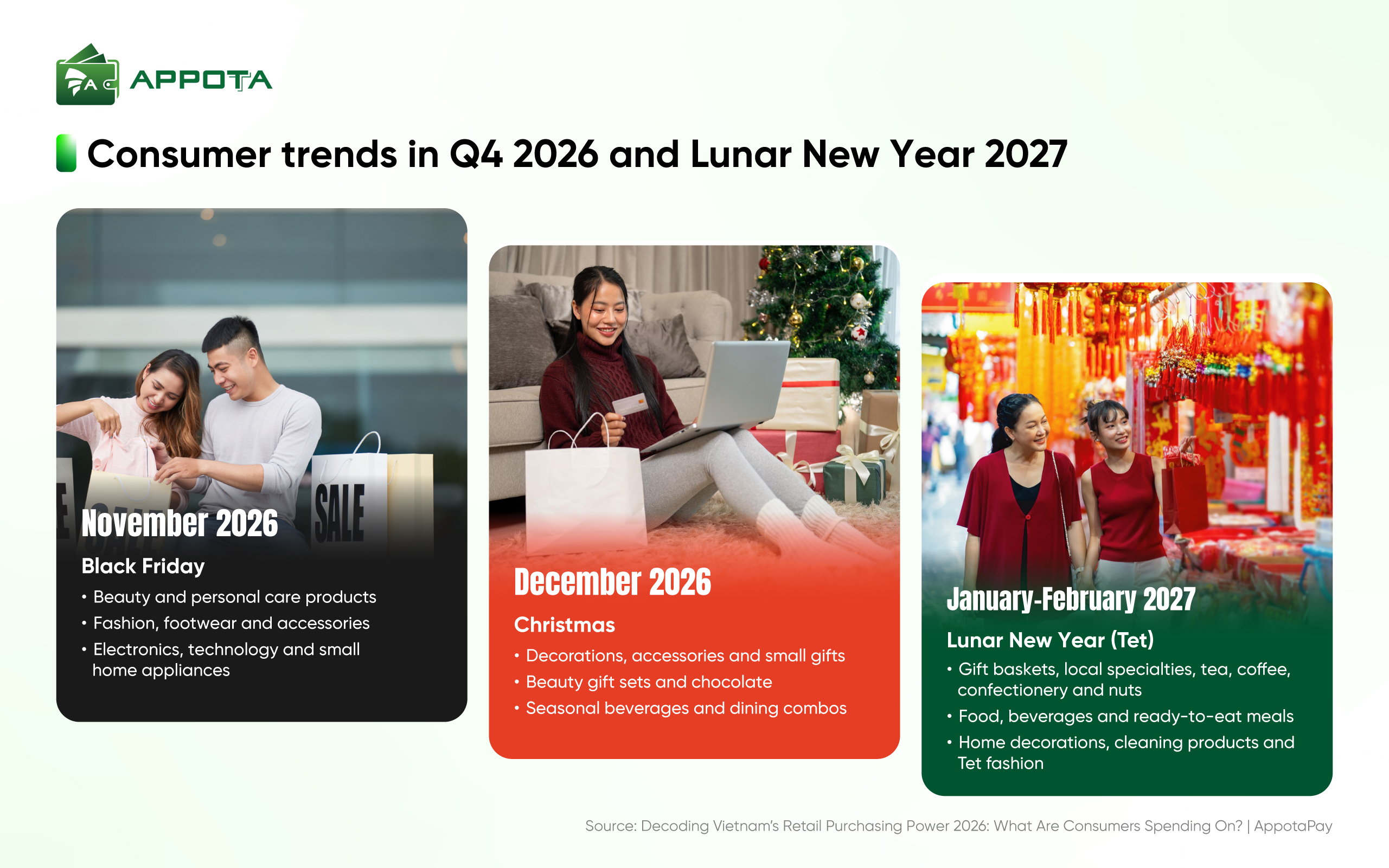
As Vietnam enters the year-end shopping season and prepares for Lunar New Year 2027, the retail market is expected to benefit from improving consumer sentiment and spending capacity. According to AppotaPay’s report, the share of consumers with a positive assessment of their current income situation increased from 45% in Q2 to 58%. Meanwhile, the proportion of consumers planning to maintain or reduce their spending fell from three-fifths in Q2 to less than two-fifths in Q3, signaling a gradual improvement in consumer confidence.
Online purchasing power is also forecast to grow by more than 20% year-on-year in Q4 2026. This presents an opportunity for retailers to capture rising seasonal demand, particularly as consumers increasingly take a proactive approach to researching products, comparing prices and choosing the most suitable shopping channels before making a purchase.
AppotaPay’s Perspective: Improved purchasing power does not necessarily mean consumers will spend less cautiously. Product quality, competitive pricing and convenience remain key factors in purchasing decisions. Retailers should therefore prepare inventory, refine sales policies and strengthen their ability to operate across multiple channels, while ensuring fast and seamless payment processes as transaction volumes increase during the peak shopping season.
Ready to drive revenue growth and optimize operations for the year-end shopping season?
Connect with AppotaPay to explore tailored payment solutions for your retail business:
- Hotline: 1900 6004
- Email: [email protected]