Payment gateway
  Payment Link
 Buy now pay later
  Scan to pay QR
 SmartPOS
  Collection support
  Pay-out support
  Appota E-wallet
 Top up service
  Charging service
  Press
Press  Promotions
  Events
  Blog
Blog 


China’s National Day holiday is approaching, bringing a surge in demand for international travel. For Vietnam, this is also a key period for travel and hospitality businesses preparing to welcome a large number of Chinese travelers.
But capturing this market takes more than knowing where Chinese travelers go. Where they search for information, how they book, what they look for in a room, and what they are willing to spend extra on are the behaviors that can help businesses tailor their products and experiences more effectively.
Below are 4 key insights into Chinese traveler behavior, analyzed and synthesized from research featured in SiteMinder’s Changing Traveller Report 2026.
The booking journey spans multiple touchpoints
Chinese travelers use a wide range of information sources before making a decision – from OTAs and social media to recommendations from people around them. In China, using AI tools such as ChatGPT to research information and build travel itineraries is also becoming increasingly common.
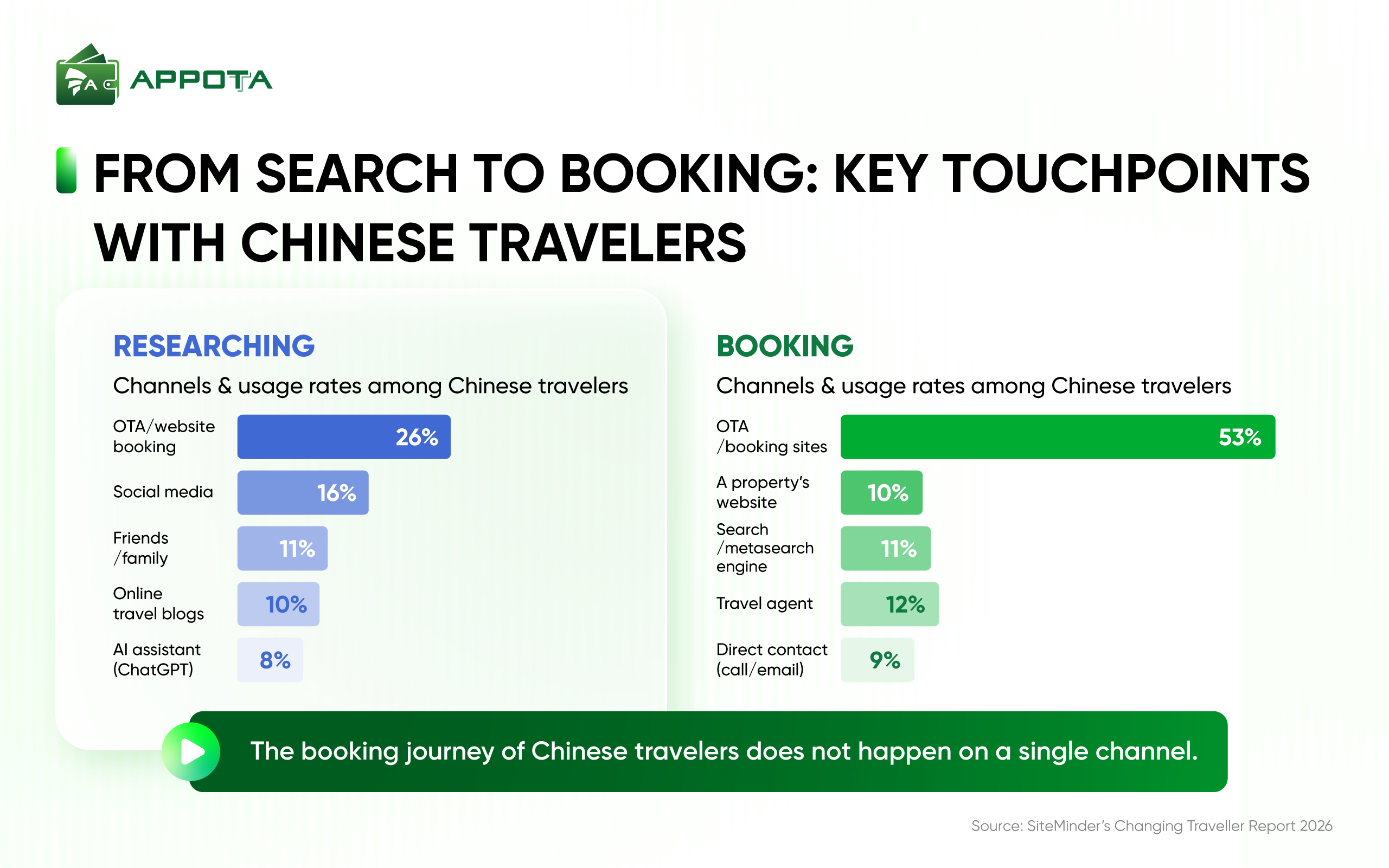
This shows that the journey from discovery to booking no longer takes place on a single channel. A traveler may discover a destination on social media, learn more through search engines or AI, check reviews, and only then move to a booking platform to complete the transaction.
For businesses, the challenge is therefore not simply to be present on one sales channel, but to ensure that information, visuals, reviews, and brand experience remain consistent throughout the entire discovery and booking journey.
Chinese travelers are looking for more than just a place to stay
When choosing a hotel, accommodation quality ranks highly among Chinese travelers’ priorities. 84% of Chinese travelers are inclined to choose an upgraded room category over a standard room. Among the most important room features are:
- Quietness: 36%
- View: 34%
- Fast and reliable Wi-Fi: 29%
- Bed and bedding quality: 28%
Beyond upgraded rooms, Chinese travelers are also willing to pay more for additional hotel services. Technology is becoming part of the experience as well: 47% of Chinese travelers believe robot services can enhance their stay.
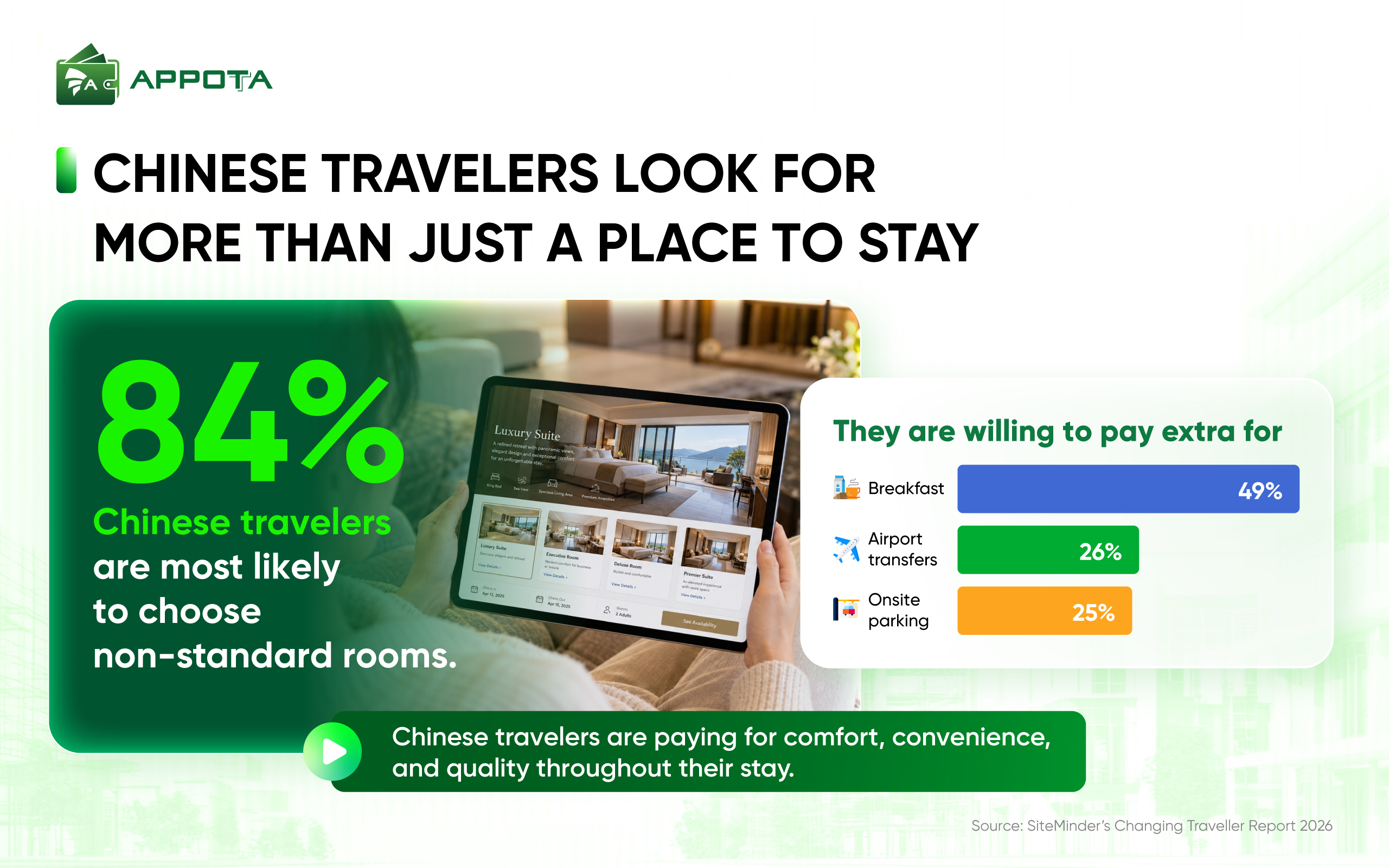
These figures show that Chinese travelers are not simply looking for a room at the right price. They are willing to pay for comfort, convenience, and the quality of the overall stay experience.
Chinese travelers are willing to “buy experiences”
Looking only at the initial booking value can cause businesses to overlook a significant portion of Chinese travelers’ spending potential.
91% of surveyed Chinese travelers are inclined to spend on experiences beyond their accommodation. This broadens the revenue opportunity for travel businesses: hotels can move from simply “selling rooms” to selling the overall travel experience.
A meal, spa treatment, airport transfer, or entertainment activity can generate additional revenue while creating opportunities to increase the value of each guest.
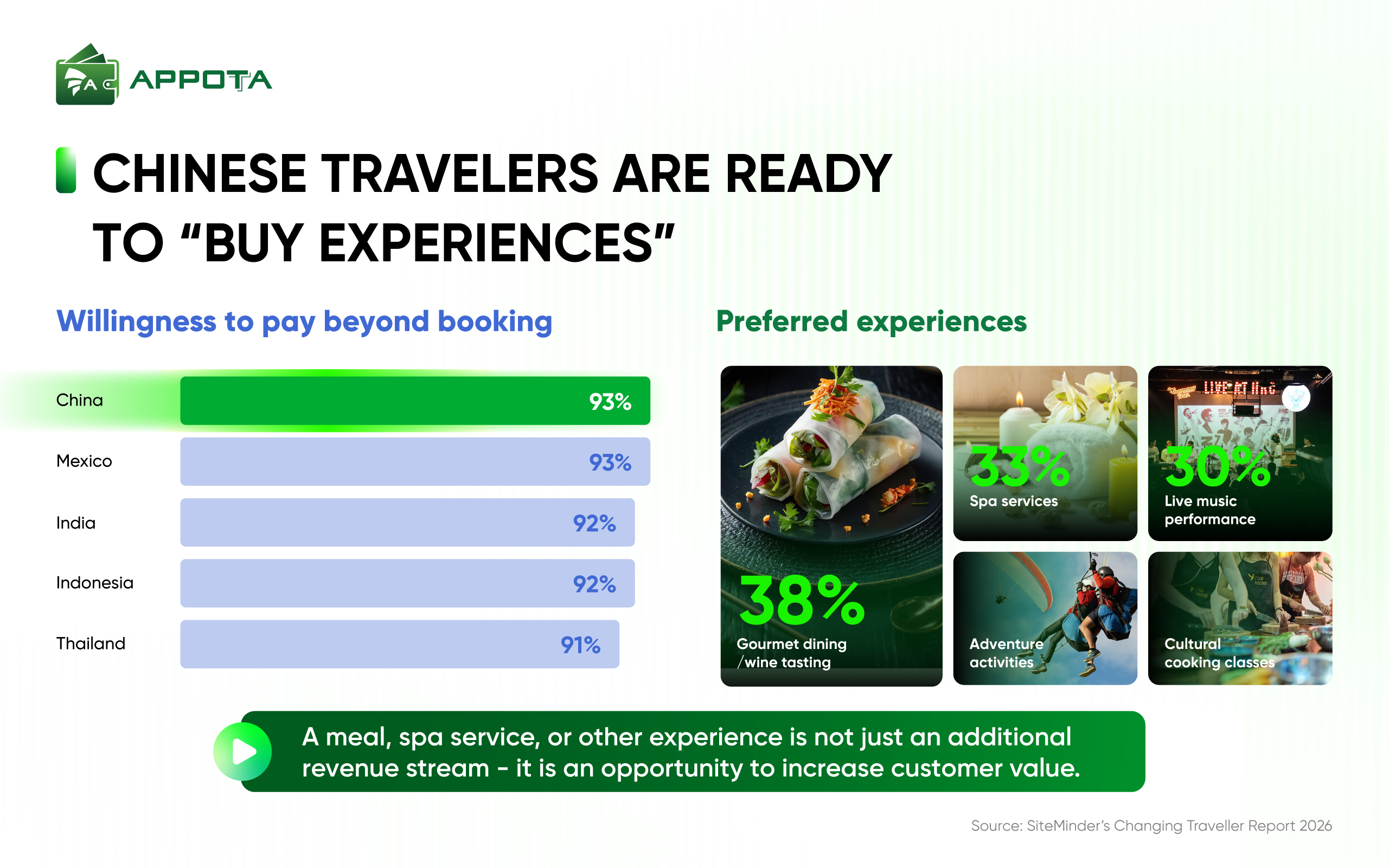
Notably, when asked what would encourage them to return, 46% chose memorable experiences, 41% valued getting good value for money, and 40% were attracted by free offers. Meanwhile, 29% of Chinese travelers are inclined to return because of loyalty programs.
This suggests that experiences and post-stay engagement can also play a role in customer retention, rather than focusing solely on acquiring new bookings.
Digital experience and payments are also part of the journey
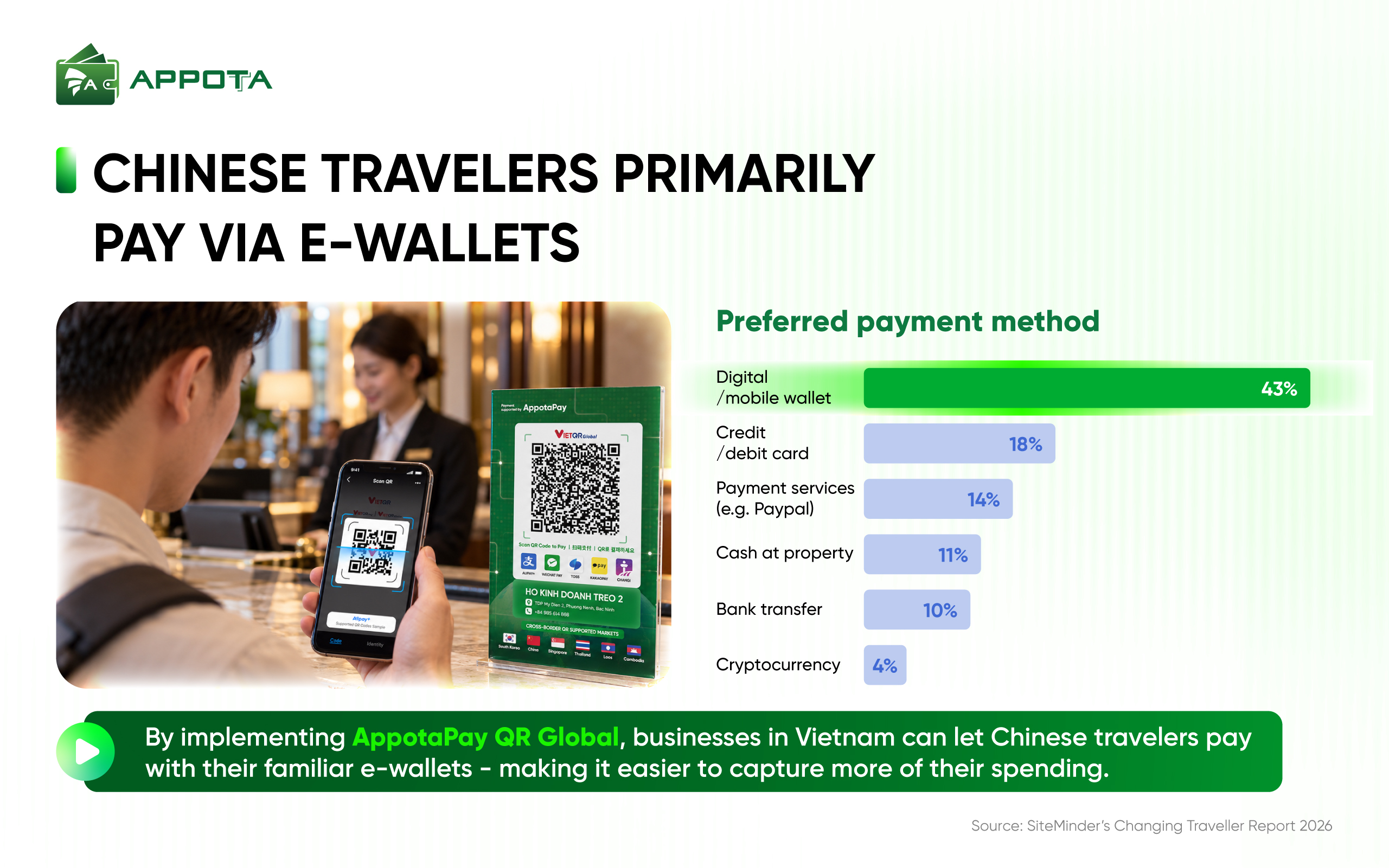
For Chinese travelers, convenience is not limited to searching for and booking services. The way they pay also matters. Familiar, mobile-friendly payment methods can become an important part of the overall travel experience.
On the other hand, friction during the booking process can cause travelers to abandon a transaction. Chinese travelers surveyed said they would stop a booking if a website does not feel secure, is not convenient to use on mobile, or takes too long to load.
For travel and hospitality businesses, optimizing the customer journey therefore means more than delivering quality services. It also means removing friction across every stage, from discovery and booking to payment.
Is your business ready to capture more spending from Chinese travelers?
These behaviors show that the opportunity presented by the Chinese travel market is not only about attracting more visitors, but also about increasing value at every touchpoint of the customer journey.
- Be present where travelers search. Strengthen your presence across booking platforms, social media, search engines, and emerging information channels used by Chinese travelers.
- Design a high-quality stay experience. Rooms, Wi-Fi, breakfast, transfers, and additional amenities can all become opportunities to create more value.
- Capture more spending beyond the booking. From dining and spa services to entertainment and other add-ons, businesses can turn each stay into a journey with more revenue opportunities.
- Reduce friction across the digital experience. From search and booking to payment, every step should be fast, convenient, and aligned with travelers’ habits.
To capture more of this spending, payment experiences should also be designed around the habits of Chinese travelers. With AppotaPay’s QR Global, businesses can accept cross-border QR payments, allowing Chinese travelers to pay with Alipay and WeChat Pay in Vietnam, while giving businesses a more convenient way to manage and reconcile transactions.
Every seamless touchpoint is another opportunity to capture revenue.
Contact AppotaPay today to upgrade your payment experience and get ready for the international travel peak season.