Payment gateway
 Payment Link

 Buy now pay later
 Scan to pay QR

 SmartPOS
 Collection support
 Pay-out support
 Appota E-wallet

 Top up service
 Charging service
 Press
 Promotions
 Events
 Blog


Vietnam’s food and beverage (F&B) market continued to show positive signs in the first nine months of 2026. However, behind the market’s growth lies an uneven business landscape: many businesses are still struggling to maintain revenue, operating costs continue to rise, and growth opportunities increasingly depend on each brand’s business model and ability to adapt.
Market growth, uneven business performance
According to the National Statistics Office of Vietnam, total retail sales of goods and consumer service revenue reached VND 5,925.7 trillion in the first nine months of 2026, up 13.4% year-on-year. Accommodation and food services grew by 16.7%.
However, business performance among F&B establishments paints a more cautious picture. According to the H1 2026 F&B Business Performance Report by iPOS.vn and Nestlé Professional, 42.7% of surveyed establishments reported declining revenue, while only 20.22% recorded growth of more than 5%.
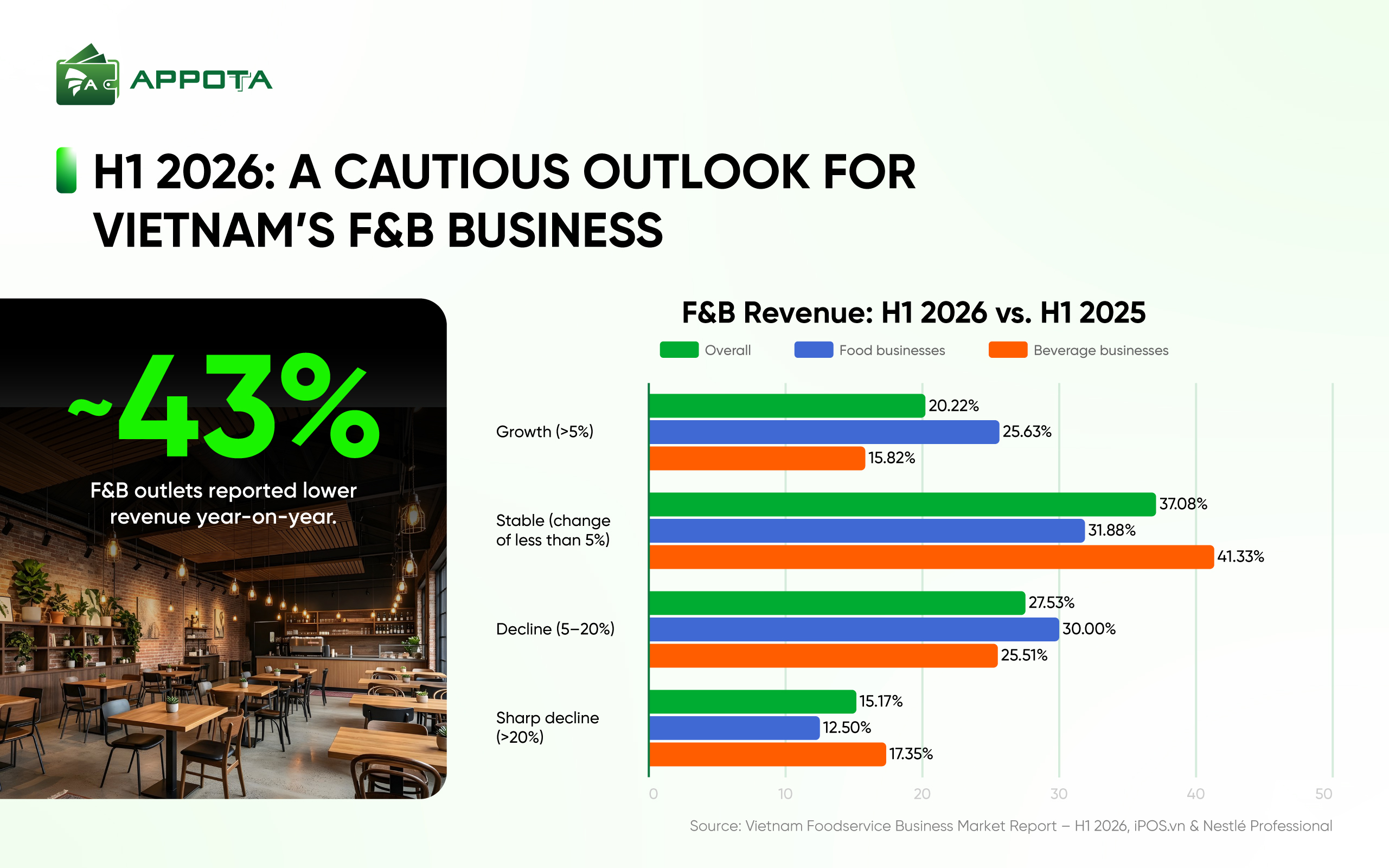
The market’s uneven performance becomes more apparent when food and beverage businesses are examined separately. Although the proportions of establishments reporting declines were similar across the two segments, 25.63% of food businesses reported growth, compared with 15.82% of beverage businesses.
This difference partly reflects how each business model generates transaction value. Food businesses can combine main courses, side dishes, beverages, and meal deals, while group dining creates further opportunities to increase average transaction value. Beverage brands, meanwhile, need to encourage customers to spend more per purchase, whether by upsizing drinks, adding toppings, or choosing higher-priced products.
Rising costs, growing pressure on profit margins
Alongside consumer demand, operating costs remain a major challenge for F&B businesses.
According to Kamereo’s Q1 2026 F&B market survey, 81.1% of businesses reported rising operating costs, while 73.6% reported increases in ingredient prices.
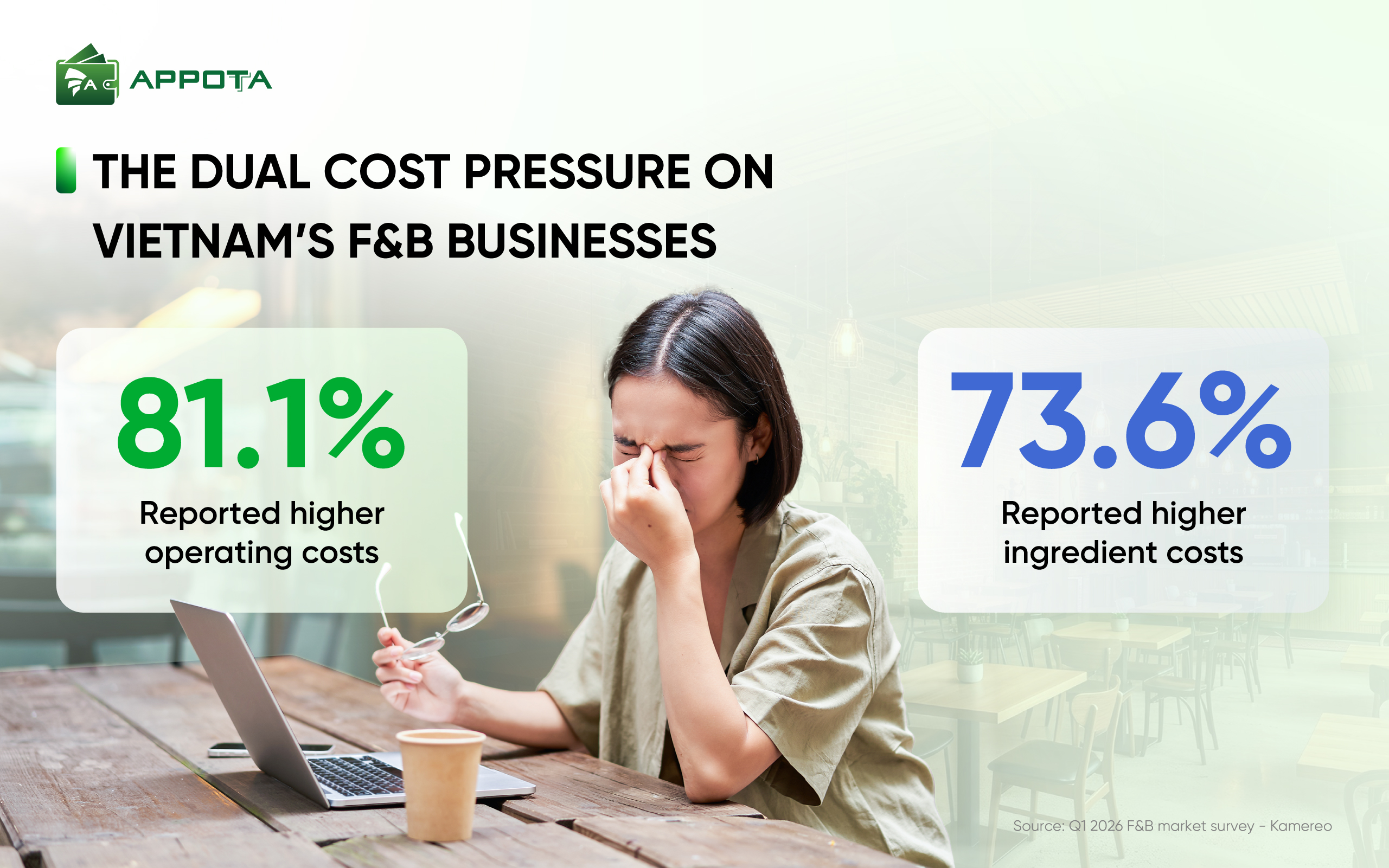
Notably, 39.62% of businesses reported an increase in order volume year-on-year, but only 28.3% reported revenue growth. This gap shows that more orders do not necessarily translate into proportionate revenue growth. The pressure on profit margins from rising input prices and operating costs makes it increasingly difficult for businesses to turn higher order volumes into stronger financial performance.
In-store sales remain a key growth driver
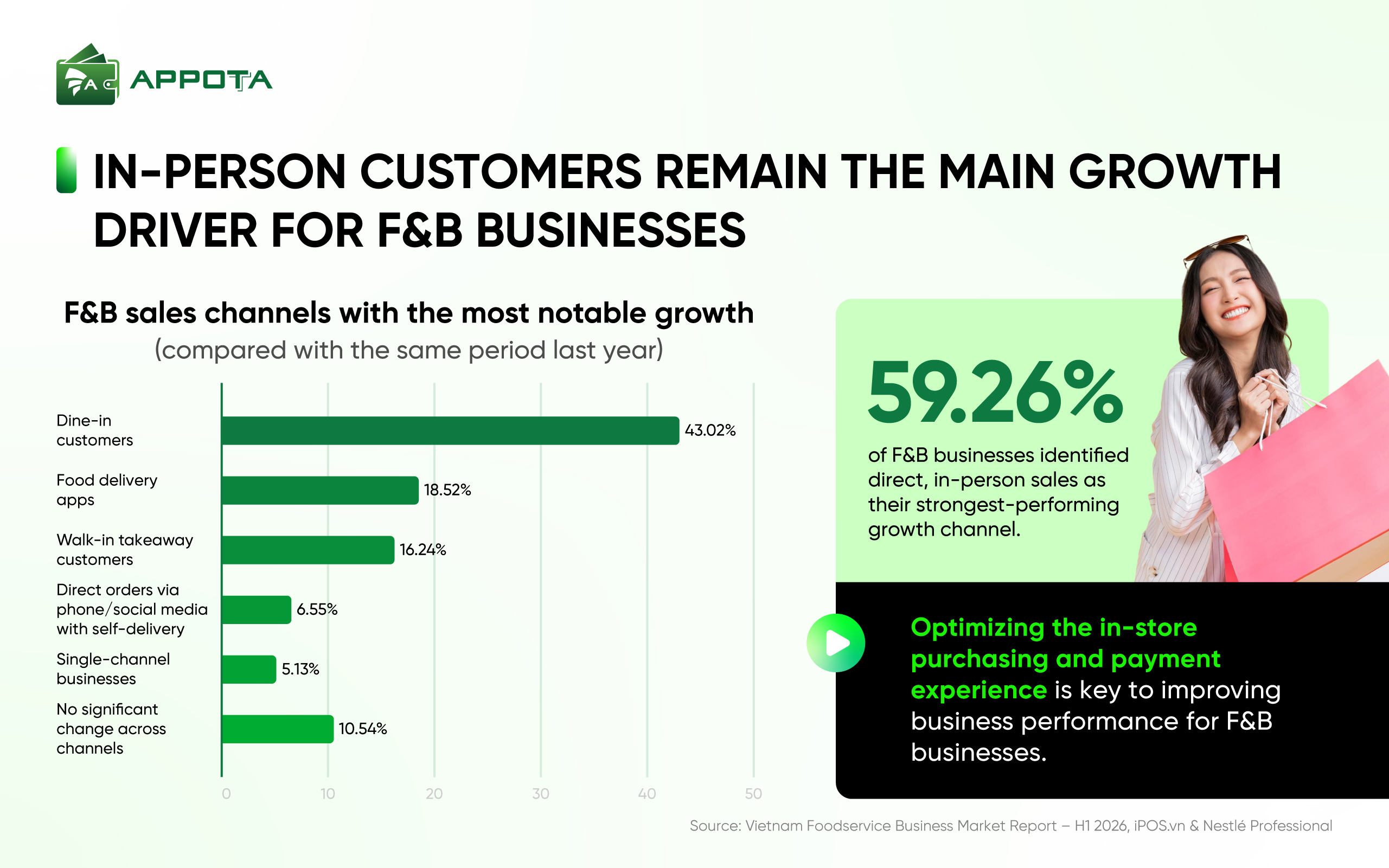
According to the F&B business survey, 43.02% of establishments identified dine-in customers as their strongest growth channel. When the 16.24% that reported the strongest growth from walk-in takeaway customers are included, 59.26% of businesses identified direct, in-person sales as their leading growth channel.
This does not mean online food delivery is losing its relevance. A NielsenIQ survey conducted in April 2026 found that 51% of respondents used ShopeeFood at least once in the previous month, highlighting the continued appeal of online food delivery among Vietnamese consumers.
Rather than choosing between physical stores and online channels, businesses need to define the role of each channel in their customer acquisition strategy while optimizing the entire customer journey—from ordering and payment to revenue management and transaction reconciliation.
F&B in H2 2026: Cautious expansion, new year-end opportunities
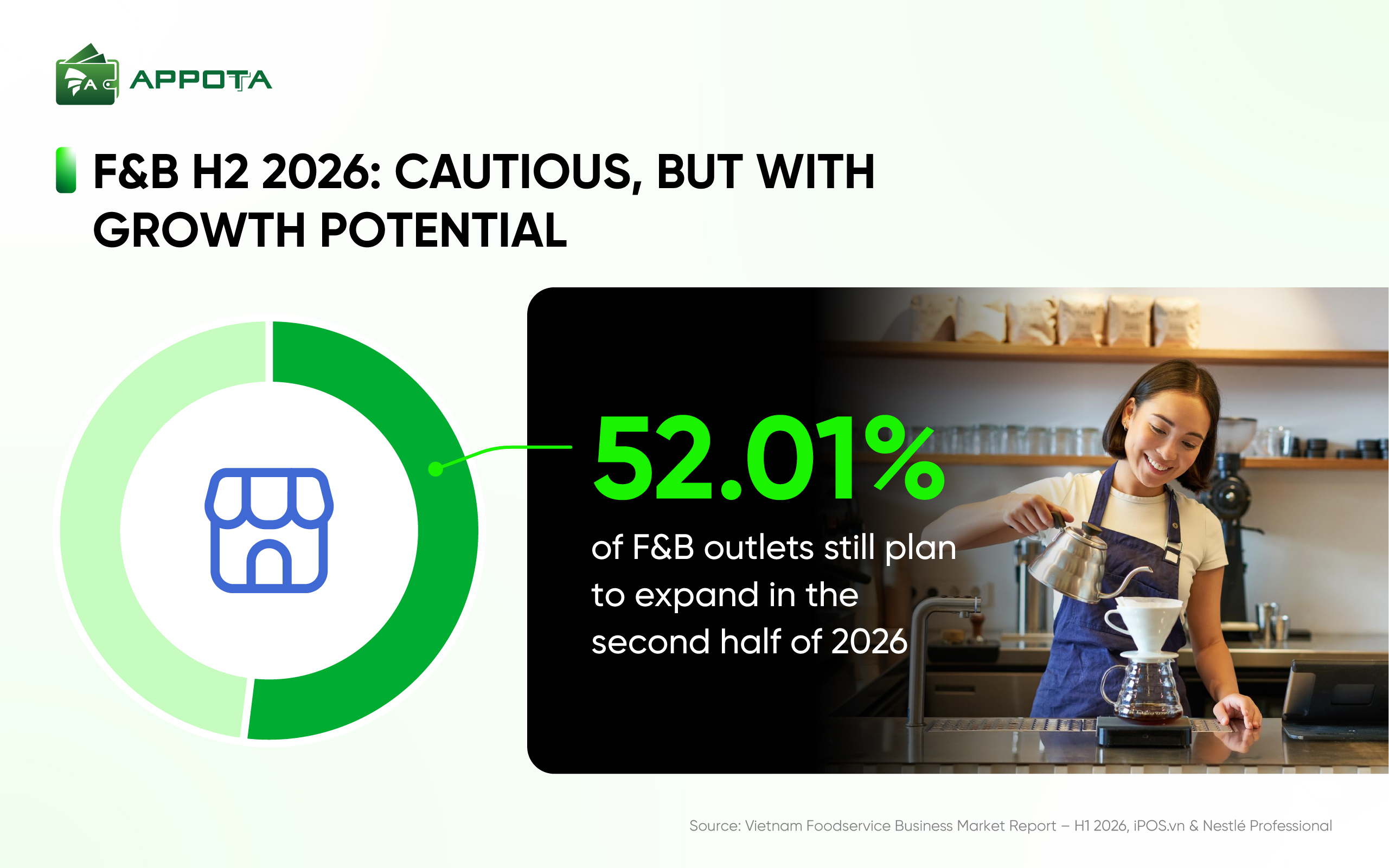
According to the F&B business survey, 52.01% of establishments still planned to expand in the second half of 2026, although this was down from 57.31% previously.
The fact that more than half of surveyed businesses are still considering expansion suggests that growth ambitions remain. The year-end period also brings festivals, social gatherings, and group dining occasions, creating seasonal opportunities for hotpot and barbecue restaurants, family dining venues, and other establishments catering to groups. Brands should prepare carefully to accommodate increased customer traffic during this peak season.
Indeed, several major chains continued to deliver positive results in Q2 2026:
- Highlands Coffee: System-wide sales increased 46.7% year-on-year, while same-store sales in Vietnam rose 11.5%. The chain reached 1,000 stores in June 2026.
- Phuc Long: Q2 revenue reached VND 550 billion, up 26.9% year-on-year, while average daily revenue at existing standard stores increased 18.5%.
Although these results do not represent the entire industry, they demonstrate the growth potential available to F&B businesses that successfully leverage their existing store networks.
Vietnam’s F&B market: Growth through efficiency, not just scale
The first nine months of 2026 show that Vietnam’s F&B market continues to offer growth opportunities, but performance remains uneven across business models and individual brands.
To maintain a competitive edge in the next phase, businesses should focus on four priorities:
- Cost control: Optimize ingredients, portioning, and operating processes to protect profit margins.
- Increase average transaction value: Develop meal deals, add-on products, and product mixes that align with actual customer demand.
- Enhance the in-store experience: Improve ordering, payment, and service processes to make the customer journey more convenient.
- Expand selectively: Prioritize store-level profitability and operational control before increasing the number of locations.
Sustainable growth requires F&B businesses not only to optimize operations but also to adapt to customers’ payment needs across multiple channels. AppotaPay supports businesses with an integrated suite of payment solutions:
- SmartPOS: Accept diverse payment methods at the point of sale and issue VAT invoices directly from the device.
- Payment Gateway: Accept remote payments easily, quickly, and securely.
- Cross-Border QR Payments: Expand service capabilities for international customers through QR payments.
From in-store transactions to online payments and international customers, AppotaPay helps businesses expand their payment touchpoints and improve operational efficiency.
Contact AppotaPay for a consultation:
- Hotline: 1900 6004
- Email: [email protected]